ethereum vs bitcoin which to buy A Comprehensive Guide
With ethereum vs bitcoin which to buy at the forefront, this discussion delves into the captivating world of cryptocurrencies, exploring two of the most prominent players in the market. Bitcoin, the original cryptocurrency, was designed to be a peer-to-peer electronic cash system, while Ethereum introduced smart contracts and a broader platform for decentralized applications.
This analysis not only compares their origins and technological innovations but also highlights their market performances, investment prospects, and future outlook. As the cryptocurrency landscape continues to evolve, understanding the distinct advantages and challenges associated with each option is crucial for making informed investment decisions.
Overview of Bitcoin and Ethereum
Bitcoin and Ethereum are two of the most prominent cryptocurrencies that have significantly impacted the financial landscape. Bitcoin, introduced in 2009 by an anonymous person (or group) under the pseudonym Satoshi Nakamoto, was designed as a decentralized digital currency that allows for peer-to-peer transactions without the need for intermediaries. Its primary purpose is to provide an alternative to traditional currencies, enabling secure and transparent transactions globally.On the other hand, Ethereum was proposed in late 2013 by programmer Vitalik Buterin and launched in 2015 as a decentralized platform that enables developers to build smart contracts and decentralized applications (dApps).
Unlike Bitcoin, which primarily serves as a digital currency, Ethereum aims to create a more versatile ecosystem where users can leverage blockchain technology for various applications beyond simple transactions.While both cryptocurrencies utilize blockchain technology, they differ significantly in their use cases and functionalities. Bitcoin emphasizes security and stability as a store of value, whereas Ethereum focuses on enabling programmable transactions through smart contracts, fostering innovation in the decentralized application space.
Market Performance Comparison
The market performance of Bitcoin and Ethereum showcases their individual trajectories and investor sentiments. Historically, Bitcoin has demonstrated remarkable price surges, especially during its early years, reaching an all-time high of nearly $69,000 in November 2021. Its performance metrics indicate a strong adoption rate and a substantial increase in market capitalization, often exceeding $1 trillion.Ethereum’s price has also seen significant growth, peaking at around $4,900 in November 2021.
However, its market capitalization typically trails behind Bitcoin, reflecting its secondary status in the cryptocurrency hierarchy. As of now, Bitcoin holds a market cap of approximately $600 billion, while Ethereum sits at around $200 billion.Trading volume and liquidity are critical factors for both cryptocurrencies. Bitcoin generally leads in trading volume, often surpassing $20 billion daily, while Ethereum’s trading volume is substantial but typically lower, around $8 billion daily.
This difference highlights Bitcoin’s position as the flagship cryptocurrency, attracting more investors and traders in the market.
Investment Considerations
Investing in Bitcoin presents both potential rewards and risks. The primary benefit lies in its store of value perception, often referred to as “digital gold,” which has led to substantial returns for long-term investors. However, volatility remains a significant risk, with price swings that can lead to substantial losses in the short term.Ethereum’s investment potential is driven by its innovative smart contract functionality, which could revolutionize various sectors, including finance, insurance, and supply chain management.
Factors such as network upgrades (like Ethereum 2.0), regulatory developments, and the adoption of decentralized finance (DeFi) applications can influence Ethereum’s price trajectory in the coming years.To provide a clearer comparison, here’s a summary of the pros and cons of investing in both cryptocurrencies:
| Aspect | Bitcoin | Ethereum |
|---|---|---|
| Pros | Established store of value, high liquidity, widespread recognition | Smart contract capabilities, diverse use cases, strong developer community |
| Cons | High volatility, regulatory scrutiny | Scalability issues, competition from other platforms |
Technology and Innovation

The underlying technology of Bitcoin is based on a simple yet effective proof-of-work consensus mechanism, which ensures the security of transactions by requiring computational effort to validate blocks. This technology has proven robust, although it has led to concerns regarding energy consumption and scalability.In contrast, Ethereum introduced a more complex framework allowing for the creation of smart contracts—self-executing contracts where the terms are directly written into code.
This functionality opens up numerous possibilities for decentralized applications, enabling innovations like DeFi and non-fungible tokens (NFTs).Both platforms are actively developing scalability solutions. Bitcoin is exploring the Lightning Network, which allows for faster transactions by facilitating off-chain processing, while Ethereum is undergoing significant upgrades, including the transition to a proof-of-stake model, which aims to enhance transaction speed and reduce energy consumption.
Community and Ecosystem

The developer communities supporting Bitcoin and Ethereum are essential to their growth and innovation. Bitcoin’s community primarily focuses on maintaining security and stability, with developers contributing to its core protocol. Ethereum, however, boasts a vibrant ecosystem of developers creating dApps, DeFi projects, and NFTs, fostering a dynamic environment for innovation.Partnerships play a crucial role in both ecosystems. Bitcoin has seen collaborations with various financial institutions, enhancing its legitimacy as an investment vehicle.
Ethereum’s ecosystem, in contrast, is characterized by numerous partnerships with tech companies and startups, driving the adoption of its smart contract capabilities.Notable projects built on Ethereum’s blockchain include Uniswap, a decentralized exchange, and Chainlink, a decentralized oracle network. In comparison, Bitcoin has fewer projects directly built on its blockchain, as its primary function remains as a digital currency rather than a platform for decentralized applications.
Regulatory Environment
The legal considerations for investing in Bitcoin vary significantly across countries. In some jurisdictions, Bitcoin is recognized as legal tender, while in others, it faces strict regulations or outright bans. Investors must navigate this complex landscape to ensure compliance with local laws.Ethereum’s regulatory environment is also evolving, particularly as it relates to its smart contract capabilities. Some jurisdictions have begun to recognize the potential for regulation around DeFi projects, aiming to protect consumers while fostering innovation.
Recent regulatory news, such as proposed guidelines for digital assets, can significantly impact both cryptocurrencies.Recent developments include ongoing debates in the U.S. regarding the classification of cryptocurrencies as securities or commodities, which could affect the future of both Bitcoin and Ethereum in the regulatory space.
Future Outlook
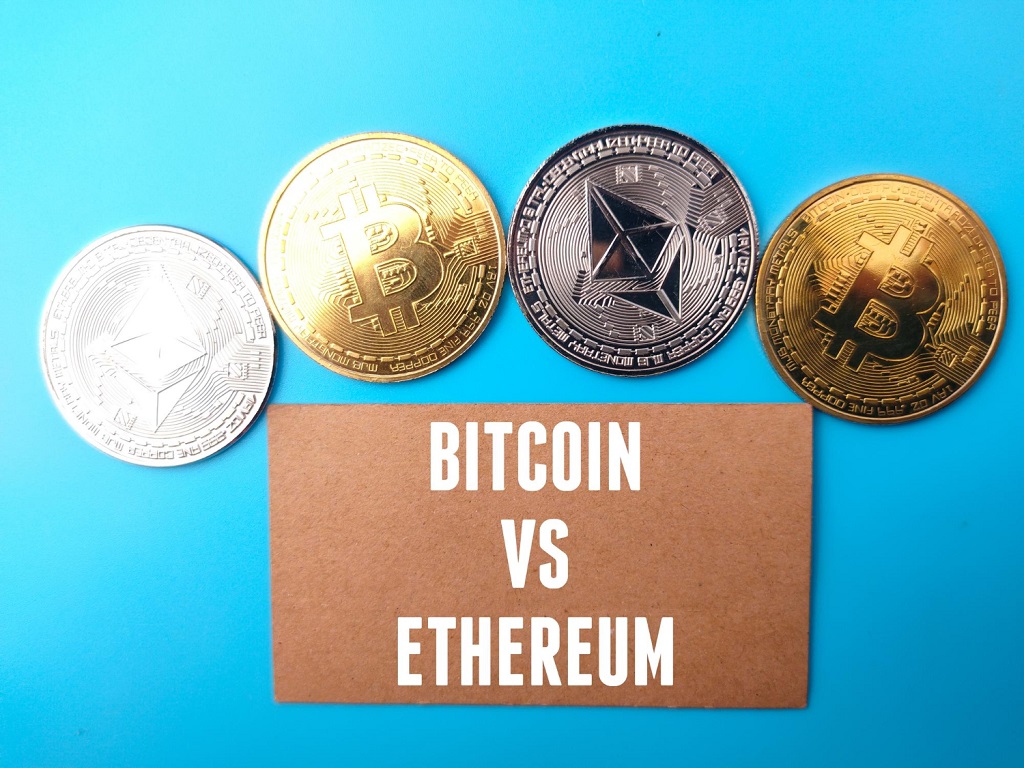
The future trends for Bitcoin and Ethereum will likely be shaped by ongoing technological advancements and regulatory developments. Bitcoin may continue to solidify its position as a store of value, especially in times of economic uncertainty, as more institutional investors enter the market.For Ethereum, the continued growth of the DeFi sector and the successful implementation of Ethereum 2.0 are critical factors that could lead to significant price changes.
Expert opinions suggest that Ethereum’s ability to maintain its competitive edge will depend on its scalability solutions and the broader adoption of its platform.As both cryptocurrencies evolve, monitoring their developments and market dynamics will be crucial for potential investors looking to make informed decisions.
Final Wrap-Up
In summary, the decision around ethereum vs bitcoin which to buy is not just about choosing one over the other but understanding their unique strengths and market dynamics. Each cryptocurrency offers different potentials for growth and innovation, depending on individual investment goals and risk tolerance. As the market progresses, staying informed and adaptable will be key to navigating your cryptocurrency investments.
Key Questions Answered
What is the main difference between Bitcoin and Ethereum?
Bitcoin is primarily a digital currency designed for peer-to-peer transactions, while Ethereum is a platform for creating decentralized applications using smart contracts.
Which one has better investment potential?
Investment potential depends on market conditions and individual risk tolerance; Bitcoin is often seen as a store of value, whereas Ethereum is viewed as having greater growth potential due to its technology.
How do transaction fees compare between the two?
Transaction fees can vary significantly; Bitcoin typically has higher fees during peak times, while Ethereum’s fees can fluctuate based on network congestion, especially with increased demand for smart contracts.
Is it safe to invest in both cryptocurrencies?
Investing in both can diversify your portfolio, but it’s important to assess the risks associated with each and stay updated on market trends.
How do I start investing in Bitcoin and Ethereum?
You can start investing by choosing a reputable cryptocurrency exchange, setting up a secure wallet, and purchasing the desired amount of each cryptocurrency.