Ethereum And Blockchain A Deep Dive Into Their Synergy
Ethereum and blockchain are rapidly reshaping our digital landscape, offering innovative solutions that extend far beyond simple transactions. With its inception by Vitalik Buterin, Ethereum emerged not just as a cryptocurrency but as a platform for smart contracts that enhance digital interactions. This exploration unravels how Ethereum’s unique features distinguish it from Bitcoin and highlights the powerful technology of blockchain that underpins its operations.
As we delve deeper, we’ll uncover the complexities of Ethereum’s technical architecture, the diverse applications it supports, and the persistent challenges it faces in scalability and security. Understanding these facets is crucial for anyone looking to grasp the full potential of blockchain technology in our modern world.
Introduction to Ethereum
Ethereum is a groundbreaking platform that was proposed by Vitalik Buterin in 2013. The goal was to create a decentralized platform that goes beyond Bitcoin’s primary function as a digital currency. Unlike Bitcoin, which is mainly a peer-to-peer payment system, Ethereum allows developers to build decentralized applications (dApps) that leverage its blockchain technology. Ethereum’s most significant innovation is the concept of smart contracts, which are self-executing contracts with the terms of the agreement directly written into code.
These contracts automatically enforce and execute the terms when predefined conditions are met, significantly reducing the need for intermediaries and increasing efficiency.
Understanding Blockchain Technology

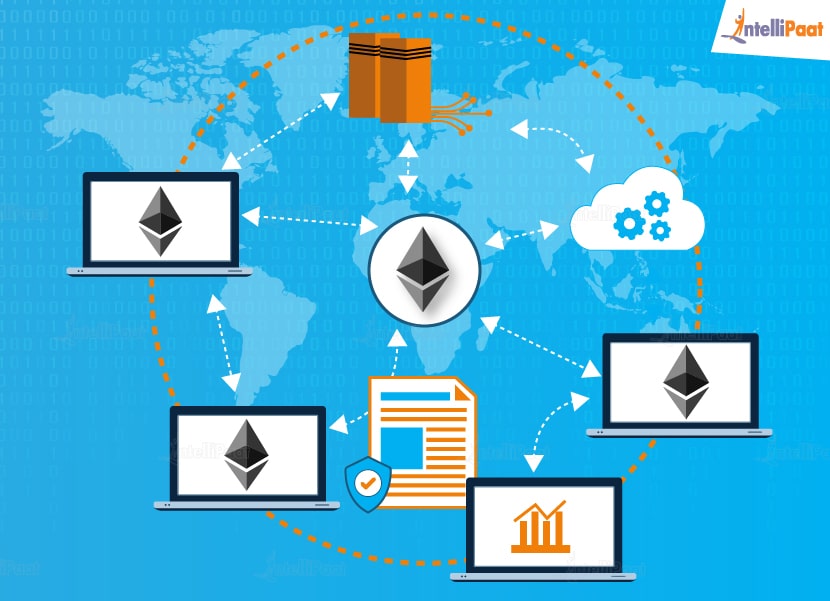
Blockchain technology is the backbone of Ethereum and operates as a distributed ledger that records transactions across multiple computers. This ensures that the information is secure, transparent, and immutable. There are various types of blockchains, each serving different purposes:
- Public Blockchains: Open to anyone and are completely decentralized, like Ethereum and Bitcoin.
- Private Blockchains: Restricted access and controlled by a single organization, often used for internal purposes.
- Consortium Blockchains: Governed by a group of organizations, offering a middle ground between public and private blockchains.
Key components of blockchain technology include nodes, which are individual computers that participate in the network; miners, who validate and add transactions to the blockchain; and ledgers, which are the records of all transactions that occur within the network.
Ethereum’s Technical Architecture
The structure of the Ethereum blockchain consists of several layers that work together to facilitate its functionality. The core layers include the Ethereum network layer, which handles peer-to-peer communication, and the protocol layer, which defines how data is stored and processed.At the heart of Ethereum’s ecosystem is the Ethereum Virtual Machine (EVM), a runtime environment that executes smart contracts. The EVM enables developers to write and deploy applications without worrying about the underlying hardware.Gas is another crucial aspect of the Ethereum network.
It refers to the computational power required to execute operations and transactions. Users must pay gas fees, which vary based on network demand, to have their transactions processed by miners.
Applications of Ethereum
Ethereum has paved the way for innovative decentralized applications (dApps) that cater to various industries. Examples include:
- Decentralized Finance (DeFi): dApps that provide financial services without intermediaries, such as lending and borrowing platforms.
- Gaming: Games that utilize blockchain technology for in-game assets and currencies.
- Marketplaces: Platforms for buying and selling goods and services directly between users.
Ethereum has also played a pivotal role in the rise of non-fungible tokens (NFTs). These unique digital assets represent ownership of specific items, artworks, or collectibles, and leverage the Ethereum blockchain for verification and trade.
Challenges Facing Ethereum
Despite its success, Ethereum has encountered scalability issues, particularly during periods of high network activity. Proposed solutions include layer-2 scaling solutions and sharding, which aim to enhance transaction throughput.Security remains a concern, especially with smart contracts being susceptible to bugs and vulnerabilities. Developers have implemented best practices and audits to mitigate these risks.Additionally, the environmental impact of Ethereum’s proof-of-work consensus mechanism has come under scrutiny.
The transition to proof-of-stake consensus, aimed at reducing energy consumption, is a significant step towards addressing this issue.
Future Developments in Ethereum
Ethereum 2.0 is on the horizon, promising a range of improvements such as increased transaction speed, enhanced security, and lower energy consumption. This upgrade will transition the network from proof-of-work to proof-of-stake, enabling a more sustainable approach to blockchain technology.The potential for Ethereum to enable new technological advances and industries is vast. Sectors such as supply chain management, healthcare, and identity verification stand to benefit from Ethereum’s capabilities.Predictions for Ethereum’s evolution suggest it will remain a cornerstone of the blockchain ecosystem, fostering innovation and collaboration among various projects and platforms.
Comparative Analysis with Other Blockchains

When comparing Ethereum to other leading blockchain platforms such as Binance Smart Chain and Solana, notable distinctions emerge. Ethereum is known for its robust developer community and extensive ecosystem, which includes a wide array of dApps and services.Unique features that set Ethereum apart include its first-mover advantage in smart contracts and the EVM, which simplifies the development process for decentralized applications.
Partnerships and collaborations within the blockchain space further enhance Ethereum’s position. Strategic alliances with organizations and enterprises enable the expansion of its use cases and drive adoption across various sectors.
Closure
In conclusion, the journey through Ethereum and blockchain reveals not just a technological advancement but a visionary approach to decentralization and innovation. As we look forward to the future developments of Ethereum, such as the transition to Ethereum 2.0, it’s clear that these technologies will continue to evolve, opening doors to new possibilities and industries. With ongoing improvements and increasing adoption, Ethereum stands poised to play a pivotal role in shaping the future of the blockchain ecosystem.
General Inquiries
What is Ethereum?
Ethereum is a decentralized platform that enables developers to build and deploy smart contracts and decentralized applications (dApps).
How does Ethereum differ from Bitcoin?
While Bitcoin is primarily a digital currency, Ethereum is a platform that allows for the creation of applications and smart contracts, making it more versatile.
What are smart contracts?
Smart contracts are self-executing contracts with the terms of the agreement directly written into code, which automatically enforce and execute transactions on the Ethereum network.
What is the Ethereum Virtual Machine (EVM)?
The EVM is a runtime environment for executing smart contracts on the Ethereum blockchain, ensuring that contract code runs consistently across all nodes.
What challenges does Ethereum face?
Ethereum faces challenges like scalability issues, security vulnerabilities in smart contracts, and environmental concerns due to its current proof-of-work consensus mechanism.